
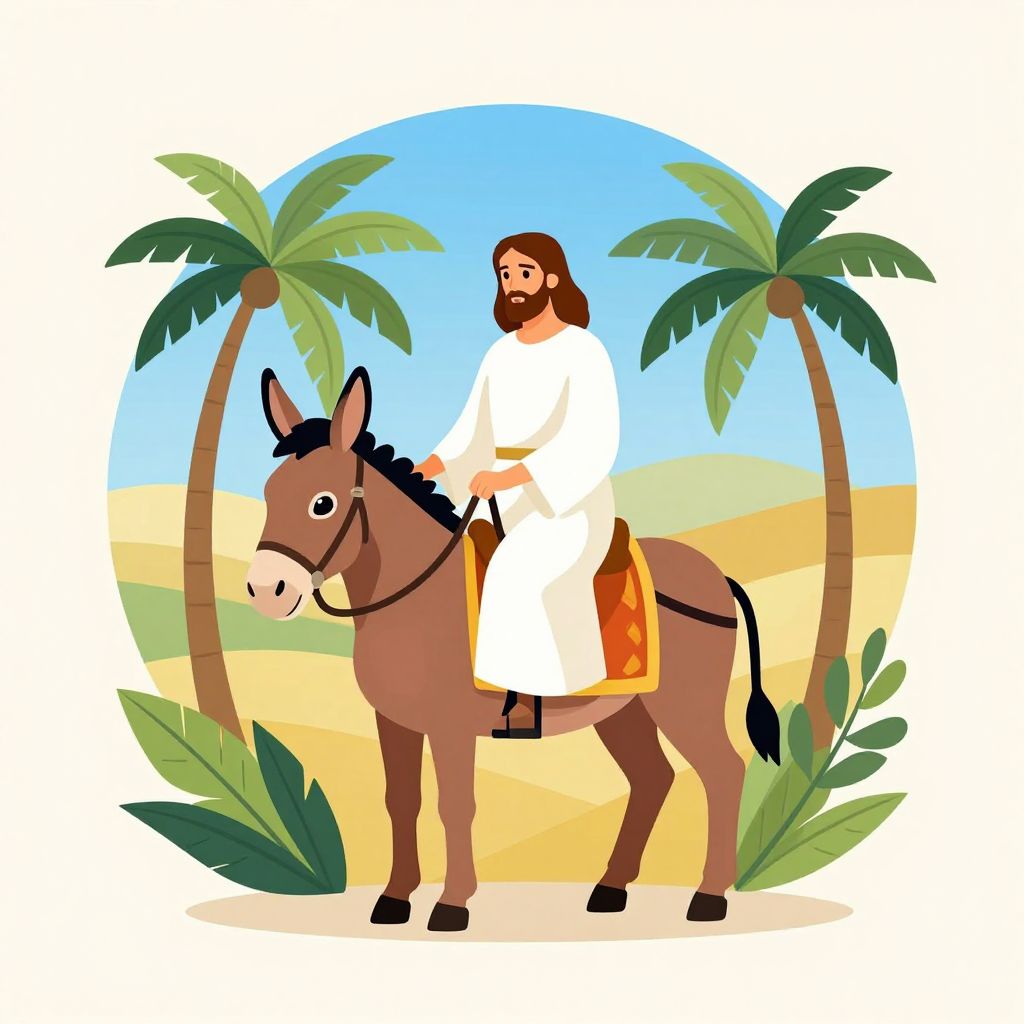
Have you ever wondered why Jesus chose to ride a donkey on His triumphant entry into Jerusalem? This moment held profound significance, reflecting both His identity and the nature of His kingdom. Understanding this act teaches us about humility, prophecy, and God’s plan for salvation.
Jesus rode a donkey to fulfill Zechariah 9:9, demonstrating that He came not as a conquering king but as a humble servant. This moment matters because it challenges our perceptions of leadership and power, inviting us to embrace a life of love and service instead.
Why Did Jesus Ride A Donkey?
Jesus rode a donkey to symbolize peace and to fulfill Old Testament prophecy. His choice of a donkey, rather than a horse, signified that He came to bring salvation, not military conquest. This fulfilled Zechariah 9:9, which foretold the arrival of the king who would come in humility.
The Prophetic Fulfillment
The Gospel of Matthew explicitly states that Jesus’ action fulfilled the prophecy of Zechariah. Matthew 21:4-5 reads, “This took place to fulfill what was spoken through the prophet: ‘Say to Daughter Zion, See, your king comes to you, gentle and riding on a donkey, on a colt, the foal of a donkey.’”
Prophecies in the Scriptures prepare the hearts of those longing for a Savior. The Jews expected a royal Messiah who would overthrow their oppressors. Jesus patterns His entrance on humility—often the opposite of the world’s views on strength and victory.
In biblical times, a donkey symbolized peace. Kings would ride horses to demonstrate military power, but donkeys signified peaceful intentions. Jesus’ choice revealed His mission: to bring peace between God and humanity through His sacrificial death.
Today, how does the idea of peace through humility resonate in your life? Are you seeking to define success by worldly standards, or do you embrace God’s definition, one rooted in love and service?
The Nature of Jesus’ Kingship
Jesus’ choice to ride a donkey illustrates the nature of His kingship. His reign contrasts with worldly power, inviting followers into a new way of life centered on serving others.
A Different Kind of Leader
Jesus demonstrated a radical departure from kings who wielded power. He came to serve, not to be served. In Mark 10:45, He states, “For even the Son of Man did not come to be served, but to serve, and to give his life as a ransom for many.”
He shows us that true leadership is marked by humility and compassion. How might you redefine your view of leadership in your own life? Are there ways you can serve rather than seek recognition?
Inviting Us to Follow His Example
By riding a donkey, Jesus invites us to follow in His steps. His humility is a model for all Christians. Philippians 2:5-8 urges believers to have the same mindset as Christ, explaining how He humbled Himself and became obedient to death.
This example encourages us to confront pride and ambition in our hearts. Are we willing to serve others, even when it feels sacrificial? Christ’s humility poses a challenge to our worldly inclinations.
The Reactions of the Crowds
The crowds’ response to Jesus’ entry offers insight into human nature. On one hand, they recognized His authority, shouting, “Hosanna to the Son of David!” (Matthew 21:9). Yet, their understanding of kingship remained superficial.
The crowd wanted deliverance from oppression, but their expectations reflected a limited view. They celebrated a king who would defeat their enemies rather than a Savior who would first address their sin. This tension reveals how easily people misinterpret God’s plans.
As you reflect on your own expectations of Jesus, consider this: Do you want Him to serve your agenda, or are you open to His redemptive purpose?
The crowd offered praise, yet many later turned against Jesus when He did not fit their expectations. John’s Gospel notes that their cries of “Hosanna!” transformed into calls for His crucifixion. This fluctuation highlights how faith can sway based on circumstances and desires.
How steadfast is your own faith? Are you rooted deeply enough to trust Christ in challenging times?
Jesus’ donkey ride provides a profound lesson in choosing the path of humility over pride. He lived what He preached, modeling true love for others. Misconceptions about what a king should be flooded the hearts of many, yet Christ’s message always pointed to selflessness.
Humility is not a popular virtue. In a culture that promotes self-promotion, Jesus’ example flips the script. Matthew 23:12 warns, “For those who exalt themselves will be humbled, and those who humble themselves will be exalted.”
This change in perspective encourages believers not only to seek Christ’s pattern but also to manifest it in their relationships. Who might you serve today? How can you demonstrate humility in a tangible way?
The donkey ride was part of a greater plan that unfolded in God’s timing. Just as Jesus did not rush to fulfill the people’s expectations, we can trust God’s timeline in our own lives. Ecclesiastes 3:1 states, “There is a time for everything, and a season for every activity under the heavens.”
When faced with waiting or uncertainty, how can you cultivate patience? Allow the humble king to lead you through these moments.
Understanding why Jesus rode a donkey transforms our daily lives. It calls us to live in light of humility, service, and grace. His example invites a response: to accept the challenge of embodying these characteristics.
- Reflect on Matthew 20:26-28. How can you serve those around you this week?
- Ask God for eyes to see opportunities to extend grace and kindness to others.
- Identify an area of your life where you can practice humility. How might this shift your relationships?
- Engage in community service or acts of kindness inwardly motivated by love.
- Pray for a heart like Christ, one eagerly seeking the good of others.
In light of Jesus’ humility, approach God with prayers of surrender. Ask Him to help you embrace opportunities to serve and lead in love. James 1:5 reminds us, “If any of you lacks wisdom, let them ask of God, who gives generously to all without finding fault.”
With this promise in mind, approach each day with a desire to reflect Christ’s character, reigning in humility as He did.
The story of Jesus riding a donkey invites you to reconsider the nature of leadership, faith, and greatness. With each step He took into Jerusalem, He beckoned followers into a deeper relationship, marked by service to others and reliance on God. His ride wasn’t merely about an entrance; it was about establishing a kingdom radically different from the worldly systems of power.
As you delve deeper into faith, consider how the image of Christ on a donkey informs your understanding of who He is and what it means to follow Him. Will you choose to imitate Him in your every interaction, embracing humility as a hallmark of your faith journey?
As you reflect on these truths, consider exploring more faith-based topics. Check out our articles on the last verse in the Bible and what Jesus died for to deepen your understanding and walk with Christ.